
Apply for Homestead Exemption in Collier County (2026)
- Team 239

- 4 hours ago
- 12 min read
What if ignoring a single piece of paperwork could cost you over $1,500 every single year you own your home? In the competitive Southwest Florida real estate market, securing your property is only the first step, and learning how to apply for homestead exemption in Collier County is where the real strategy begins. We understand that the transition into a new home is a whirlwind of activity. Between unpacking and settling into your new community, the pressure of gathering residency documents and meeting strict government deadlines can feel overwhelming.
You shouldn't have to worry about whether you're overpaying the tax collector. This guide provides a clear, expert roadmap to help you secure your "Save Our Homes" assessment cap and enjoy immediate peace of mind. We'll break down the essential residency requirements, explain how to navigate the online portal before the March 1 deadline, and show you how to port existing benefits to your new property. By the end of this article, you'll have a foolproof plan to slash your 2026 tax bill and protect your investment for the long term.
Table of Contents
Understanding the Florida Homestead Exemption in Collier County
The Homestead exemption in Florida serves as the cornerstone of property tax relief for permanent residents in the Sunshine State. For 2026, this legal provision remains the most effective way for Collier County homeowners to lower their tax burden. It isn't just a courtesy; it's a constitutional right that significantly alters how your property is valued for tax purposes. Many new residents are initially unsure about how to apply for homestead exemption in Collier County, but the process is a straightforward path to significant financial preservation.
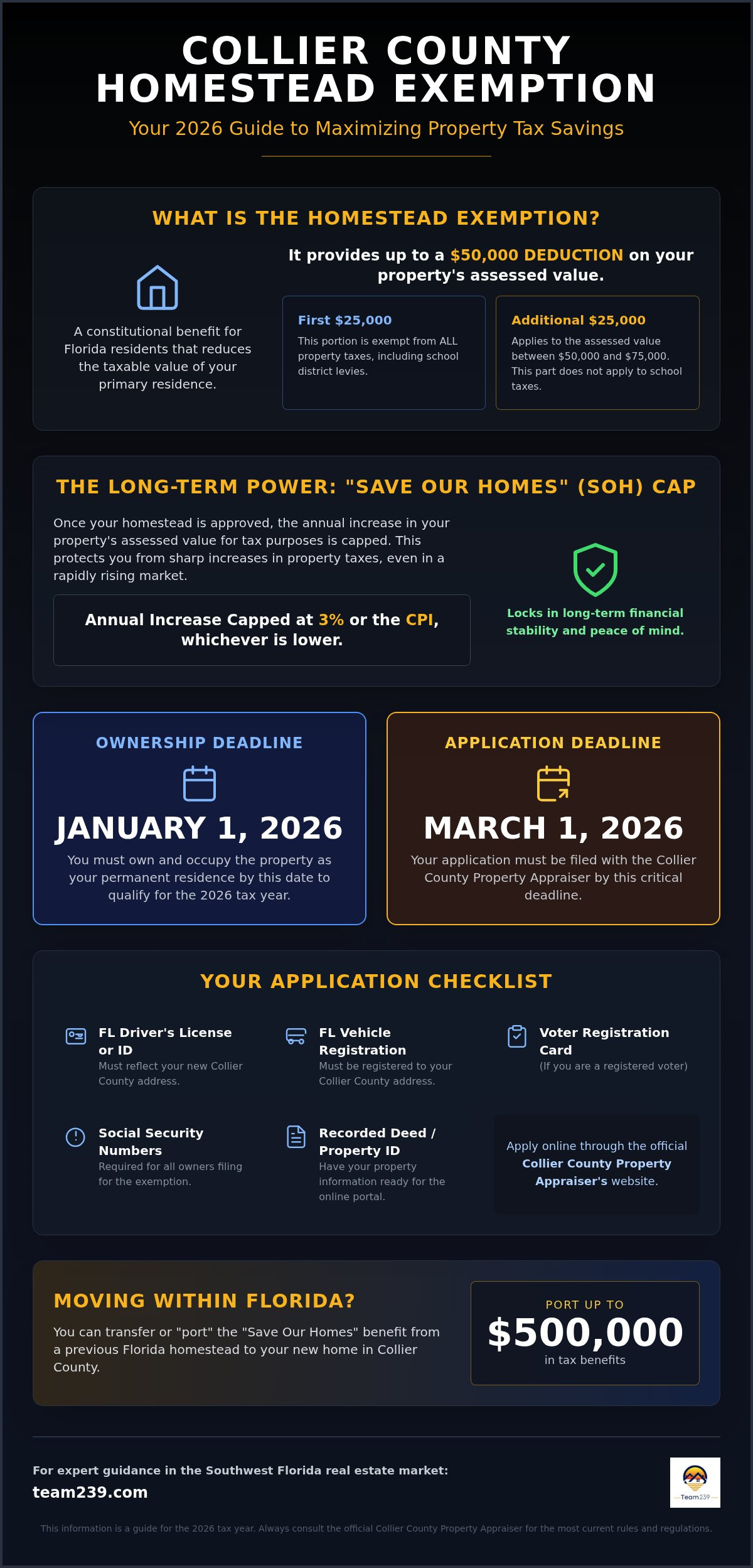
The exemption works through a two-tier system. The first $25,000 of your home's assessed value is exempt from all property taxes, including school district levies. An additional $25,000 exemption applies to the assessed value between $50,000 and $75,000, though this second portion doesn't apply to school taxes. For many residents, this translates to thousands of dollars in cumulative savings over the life of their home ownership. It's the first step in locking in your status as a Florida resident and protecting your investment.
The Financial Impact: How Much Can You Save?
While the immediate deduction is valuable, the real wealth preservation comes from the "Save Our Homes" (SOH) benefit. Once you've established your homestead, the annual increase in your property’s assessed value is capped at 3% or the percent change in the Consumer Price Index, whichever is lower. This cap ensures that your property taxes won't spiral out of control even if local real estate prices surge. The SOH cap protects homeowners from tax spikes even when Naples market values skyrocket. Research indicates that these combined benefits can result in annual savings ranging from $437 to $1,500 depending on your specific tax district and home value.
Who Should Apply in 2026?
If you purchased your primary residence in 2025, you are the primary candidate for this filing. You must own and occupy the property as your permanent domicile as of January 1, 2026, to qualify for the current year. This is particularly vital for those exploring Naples Florida Homes for Sale or purchasing new construction in Bonita Springs. New builds often see a sharp jump in assessed value once the structure is completed, making the 3% cap an essential tool for long-term budget stability. Understanding how to apply for homestead exemption in Collier County is the single most important task on your post-closing checklist. Don't leave your financial protection to chance by missing the filing window.
Eligibility Requirements for Collier County Homeowners
Qualifying for property tax relief isn't just about holding a deed. You must meet the "January 1st Rule." This mandates that you own and occupy the property as your primary residence on the first day of the tax year. If you close on January 2nd, you won't be eligible for the benefit until the following year. It's a hard line in the sand that requires proactive planning. Before you research how to apply for homestead exemption in Collier County, ensure your Florida residency is legally established.
Florida law is strict about "double dipping." You can't claim a residency-based tax break in another state while holding one here. A legal domicile for tax purposes is your true, fixed, and permanent home where you intend to remain indefinitely. Breaking ties with a former state is a critical step for your application's success. Beyond the standard $50,000 exemption, there's additional support available. Widows, widowers, and blind persons can receive extra deductions. Veterans with service-connected disabilities or seniors over 65 who meet specific income requirements often qualify for expanded relief. Consulting the Collier County Property Appraiser ensures you aren't leaving money on the table.
The 2026 Documentation Checklist
Gathering your paperwork early prevents last-minute stress. The appraiser's office requires specific proof to verify your status. You'll need to provide your Florida Driver’s License, which must reflect your new Collier County address. If you don't drive, a Florida ID card is acceptable. Additionally, have your Florida Vehicle Registration and Voter Registration card ready. You must provide Social Security numbers for all owners filing for the exemption. Finally, keep your recorded deed information or your Property ID number handy to speed up the process.
Residency Evidence for Newcomers
Transitioning from a "snowbird" to a full-time resident requires a clear paper trail. Utility bills and bank statements serve as excellent secondary evidence to support your claim of permanent residency. They demonstrate a consistent physical presence in the community. If you're still finalizing your move or settling into a new community, Team239 can help you coordinate with local experts to ensure your transition is seamless. Remember that the burden of proof lies with the homeowner. Showing that you've moved your primary financial and legal life to Southwest Florida is the best way to ensure your application is approved without delays. Learning how to apply for homestead exemption in Collier County is much easier once these foundational documents are in order.
Step-by-Step Guide to Applying for Your Exemption
Applying for your tax benefits shouldn't be a bureaucratic nightmare. The Collier County Property Appraiser (CCPA) has streamlined the system to be as user-friendly as possible. Whether you're tech-savvy or prefer a face-to-face handshake, you have three distinct paths to secure your status. Most homeowners find that learning how to apply for homestead exemption in Collier County is a quick task that pays dividends for years to come. The process is designed for speed, but precision remains your most important tool.
Method 1: Filing Online (Recommended)
E-filing is the gold standard for efficiency. The online portal opens every year on January 1st and typically takes only 10 minutes to complete. Start by visiting the CCPA website and locating the "Exemption Filing" tab. You'll need digital copies of your Florida ID and vehicle registration ready for upload. Accuracy is paramount. Double-check your Social Security numbers and property address before hitting submit to avoid common processing delays that can stall your approval.
Method 2: In-Person Locations in Collier County
If you prefer personal assistance, four locations across the county are ready to help. The main office is located on Government Center Blvd in Naples. For those living further out, satellite offices in Orange Blossom, Golden Gate, and Immokalee offer the same expert guidance. Bring your physical documents, including your ID, registration, and deed information. This ensures you finish everything in a single visit without the need for follow-up mailings.
Method 3: Filing by Mail
Filing by mail is still a viable option for those who prefer physical records. You can download the required Form DR-501 from the Florida Department of Revenue website. Ensure you send it to the Property Appraiser's main office via certified mail. This provides a paper trail and peace of mind that your application arrived safely. Securing your home's financial future is a key part of embracing the Southwest Florida Lifestyle.
Watch out for simple errors that lead to denial. A mismatched address on your driver's license or a typo in a name can cause an immediate setback. Once you submit your 2026 application, most straightforward filings are approved within 2 to 4 weeks. You'll receive written confirmation by mail. If you haven't heard back within a month, a quick follow-up with the appraiser's office is a smart move. This proactive approach ensures your paperwork is filed correctly long before the spring rush begins.
Deadlines, Late Filing, and "Save Our Homes" Portability
Timing is everything in Florida real estate. The March 1, 2026, deadline is non-negotiable for standard applications. If you're currently figuring out how to apply for homestead exemption in Collier County, mark your calendar immediately. Missing this date isn't just a simple paperwork error; it's a significant financial setback that resets your tax assessment to full market value. Filing early in January ensures you have ample time to resolve any documentation issues before the spring rush begins.
Porting Your Benefits (Portability)
If you’re moving from another Florida residence, don't leave your hard-earned tax savings behind. Portability allows you to transfer your "Save Our Homes" benefit from your previous homestead to your new property. You must file Form DR-501T simultaneously with your new homestead application to trigger this transfer. You have a three-year window from the date you moved from your previous homestead to claim this benefit. For homeowners upgrading to high-end estates, this provision allows you to transfer up to $500,000 in accumulated tax savings. This makes moving into a luxury home in Naples far more affordable by keeping your new tax base significantly lower than the current market price.
Late Filing and Appeals
Life happens, and sometimes deadlines slip through the cracks. If you miss the March 1st cutoff, you aren't completely out of options, but the path forward is much more complex. You can file a late application with the Property Appraiser up until the 25th day after the mailing of the Notice of Proposed Property Taxes, which usually occurs in August. To succeed, you must demonstrate "extenuating circumstances" that prevented you from filing on time. This often requires a formal petition to the Value Adjustment Board (VAB) and a filing fee. Missing the filing window means losing the 3% assessment cap for an entire year, which can result in a massive tax bill if local property values continue to climb.
For residents facing specific financial challenges, the Homestead Tax Deferral serves as an additional safety net. This program allows eligible homeowners, such as low-income seniors, to defer a portion of their property taxes. It creates a lien on the property that is eventually settled, ensuring that long-term residents aren't forced to sell due to rising tax burdens. Understanding these nuances is critical for long-term wealth preservation. If you're planning a move and want to maximize your tax benefits, contact Team239 for expert guidance on luxury relocations and tax-efficient property transitions. Learning how to apply for homestead exemption in Collier County correctly the first time is the best way to secure your financial future.
Maximizing Your Southwest Florida Property Value with Team239
Owning a home in Naples or Marco Island is a strategic investment that requires more than just a successful closing. While the technical steps of how to apply for homestead exemption in Collier County are vital, the real value lies in how these tax savings fuel your long-term equity. A home with a stabilized tax base is a more manageable asset, allowing you to reinvest those savings into property improvements that drive resale value. We believe that professional real estate guidance should extend far beyond the day you receive your keys.
Kristin and Jonathan Van Heukelom provide a white-glove experience that anticipates the logistical hurdles of Florida residency. For many of our clients, the transition involves moving from high-tax states where the rules are vastly different. We bridge that gap by connecting you with the right resources and ensuring you understand how local market trends impact your specific neighborhood. Whether you are settling into a gated community or a waterfront estate, our team ensures your transition into the Southwest Florida lifestyle is seamless and financially optimized.
Beyond the Transaction: Our Client Commitment
Our relationship with you doesn't end at the signing table. We provide ongoing support for new residents, helping you navigate everything from utility setups to understanding the nuances of resort-style living. For those who are eventually looking to Sell My Home in Naples, Florida, having a documented history of homestead status and assessment caps is a significant advantage. It demonstrates a well-managed property and provides clarity for potential buyers regarding future tax implications. We specialize in luxury listings where these details often make the difference in a high-stakes negotiation.
Ready to Find Your Next Primary Residence?
The 2026 market is already showing exciting opportunities in new construction hubs like Estero and Bonita Springs. These areas offer modern amenities and innovative designs that cater to the evolving needs of Florida homeowners. If you are purchasing a new build, it’s essential to know how to apply for homestead exemption in Collier County immediately after your certificate of occupancy is issued. This proactive step locks in your 3% cap before the first full assessment of the completed structure. If you're ready to explore the latest opportunities or need a strategic partner for your next move, Contact Team239 for Expert Real Estate Guidance. We are here to help you navigate the complexities of the market with precision and local expertise.
Secure Your Financial Future in Southwest Florida
Securing your homestead exemption is more than a simple tax break; it's a strategic move to lock in your property's value and protect your long-term wealth. By meeting the March 1 deadline and verifying your residency documents, you'll enjoy significant annual savings and the protection of the "Save Our Homes" assessment cap. Mastering how to apply for homestead exemption in Collier County is the final step in truly making your house a permanent home.
At Team239, we've provided family-led expertise since 2014 to help homeowners navigate the luxury markets of Naples, Bonita Springs, and Estero. In partnership with MVP Realty Associates, LLC, we specialize in ensuring every detail of your relocation is handled with precision. Your investment deserves white-glove guidance that extends far beyond the closing table. Maximize your Southwest Florida investment, contact Team239 today to start your next chapter with confidence.
Frequently Asked Questions
What is the deadline to apply for homestead exemption in Collier County for 2026?
The deadline to file your application is March 1, 2026. You must own and occupy the property as your permanent, primary residence by January 1 of that same year to qualify. Late applications are sometimes accepted through the Value Adjustment Board if you have extenuating circumstances. However, missing this date usually means waiting another full year for tax relief and assessment protection.
Can I apply for homestead exemption online in Collier County?
Yes, the Collier County Property Appraiser offers a streamlined e-file portal at ccpafl.org. The online application portal opens on January 1 each year. Most homeowners find the digital process takes about 10 minutes to complete. Learning how to apply for homestead exemption in Collier County through the portal is the most efficient way to ensure your paperwork is processed within the typical 2 to 4 week window.
Do I need to re-apply for homestead exemption every year?
You don't need to re-apply once your exemption is granted because it renews automatically each year. The Property Appraiser sends a renewal notice every January to confirm your status. You only need to take action if your residency status changes, you move to a new home, or the title of the property is altered. If you move, you must file a new application for your new residence.
What documents are required for homestead exemption in Florida?
You need a Florida driver's license or state ID showing your Collier County property address. Additionally, you must provide your Florida vehicle registration and Social Security numbers for all owners. If you aren't a U.S. citizen, a resident alien card is required. For properties held in a trust, you'll need to submit a copy of the trust documents to verify your legal right to occupy the home.
Can I have a homestead exemption on two properties?
No, you can only claim one homestead exemption at a time. It must be your primary, permanent residence where you live for the majority of the year. Attempting to claim exemptions on multiple properties in Florida or in other states is illegal and can lead to significant penalties. If you own multiple homes, you must choose the one that serves as your legal domicile for all tax purposes.
How much does the homestead exemption actually save me on taxes?
The exemption can reduce your annual property tax bill by approximately $437 to $1,500 depending on local tax rates. The first $25,000 of the exemption applies to all property taxes. The second $25,000 applies to the assessed value between $50,000 and $75,000 for non-school taxes. Understanding how to apply for homestead exemption in Collier County is the first step toward realizing these annual savings and assessment caps.
What is homestead portability and how do I apply for it?
Homestead portability allows you to transfer up to $500,000 of your accumulated tax savings to a new Florida residence. You apply for this by filing Form DR-501T at the same time as your new homestead application. You have a three-year window from the date you moved to complete this transfer. This is a critical step for anyone upgrading their home while wanting to maintain a lower tax base.
What happens to my homestead exemption if I rent out my home?
Renting out your entire home may result in the loss of your homestead status and the associated tax caps. Florida law requires the property to remain your primary residence to qualify for the exemption. If you rent the property for extended periods, the Property Appraiser might determine that the home is no longer your permanent domicile. It's best to contact the appraiser's office directly before renting to avoid penalties.
Comments