
Buying a Second Home on Marco Island: A 2026 Buyer’s Guide

The easiest Marco Island home to enjoy part-time may not be the easiest to own from a distance. A condo can simplify some maintenance, while a single-family home may offer more privacy and control. The right fit depends on how you’ll use the property and what you’re prepared to manage.
If you’re weighing carrying costs, insurance, time away, or whether rentals are allowed, you’re asking the right questions. This buying a second home in Marco Island guide will help you compare property types with your personal and rental plans, then identify the rules and records to review before making a decision.
We’ll cover the practical differences between homes and condos, ownership costs and upkeep, rental permissions, and the property documents that can shape your plans. You’ll also see how local buyer representation can help organize property research, negotiations, and transaction steps, so you can move forward with a clearer picture of what ownership will involve.
Table of Contents
Buying a Second Home on Marco Island: Start With How You’ll Use It
A second home might be your seasonal base, a place for frequent getaways, or somewhere you visit only occasionally. Those patterns call for different features and different levels of hands-on care. Start by matching your intended use with a property type and the responsibilities you’re willing to take on.
Separate personal-use goals from rental expectations early. A property that feels ideal for family visits may not align with the rental rules, association documents, or operating arrangements that apply to a particular home or building. Treat rental potential as something to verify for each property, not an automatic feature. For background on the island’s geography and history, see Marco Island.
Before you search, answer these questions:
How often will you stay, and for how long at a time?
Will the home be for personal use only, or are you considering rentals?
How much upkeep can you handle while you’re away?
Which features matter most: privacy, parking, storage, beach access, or boating?
What property responsibilities are you comfortable coordinating?
What will your Marco Island second home need to do?
Think through your calendar, not just your ideal vacation. Frequent visits may make easy arrival, convenient parking, and practical storage especially valuable. Occasional stays may put a higher priority on a property that’s straightforward to secure and maintain between trips. Longer seasonal occupancy can make comfort, accessibility, and room for guests more important. If hosting or rental income is part of the plan, include those needs in your search criteria and assess them against the property’s documents and rules.
Which buyer priorities should guide the search?
Rank location, condition, privacy, and desired upkeep before comparing listings. Then specify which lifestyle features matter, such as proximity to the beach, boating opportunities, or community amenities. A listing’s location or description doesn’t establish access or usage rights, so assess the specific property and its governing documents. For broader context on the region’s communities and lifestyle, explore the Southwest Florida lifestyle guide.
Use your priorities to narrow the search without committing to a property type too soon. A home with more privacy may also mean more upkeep to coordinate; a shared building may involve association processes and rules. Team239 helps second-home buyers compare Marco Island homes and condos against their intended use, organizing local property research and transaction steps around the goals you’ve set.
Compare Marco Island Second-Home Options by Use and Ownership
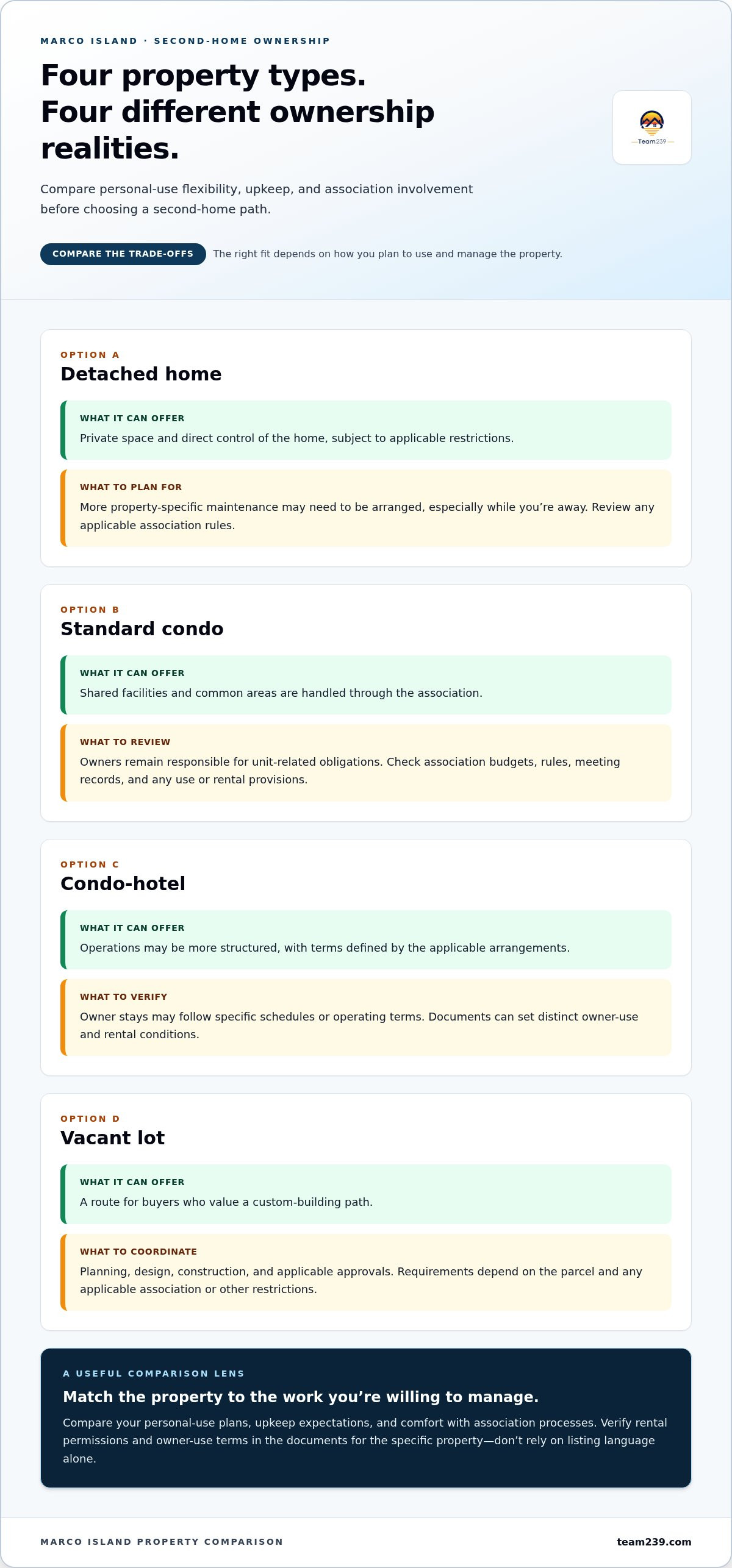
Once you’ve defined how you’ll use the property, compare ownership formats by the work and flexibility each may involve. A detached home, condo, condo-hotel, and vacant lot all have different trade-offs. None is automatically the best choice: the right fit depends on your personal-use plans, appetite for upkeep, and willingness to coordinate projects or follow association processes.
Detached homes, condos, and condo-hotels: what differs?
A detached home can offer more private space, but that may come with more direct upkeep to organize. A condo may reduce some owner-managed work through shared facilities, while adding association governance and building rules. Condo-hotels can involve distinct use and rental arrangements. For any format, read the governing documents and contract materials rather than relying on listing language or marketing descriptions. Rental permissions and owner-use terms depend on the specific property and applicable rules.
Is a Marco Island lot the right second-home route?
A lot may suit buyers who value a custom-building path and can manage the planning, design, construction, and coordination it requires. A completed home offers a different route: it may be usable sooner, though its condition and features still need careful review. If you’re also weighing a nearby market, the Naples homes buyer’s guide can provide regional comparison context.
Treat each property’s documents as part of the ownership model. County assessment records can also inform your research; the Collier County Property Appraiser provides official property appraisal and assessment information. Team239 helps buyers compare local homes and condos against their intended use and coordinate property research and transaction steps. Learn more about Team239 buyer representation.
Plan for Financing, Carrying Costs, and Time Away
The purchase price is only one part of the ownership plan. A second home also brings recurring costs, upkeep, and decisions about who will look after the property when you’re away. Build a full-year budget around the specific home, not just a mortgage estimate, and review current lender, tax, insurance, and local-rule details before committing.
How should buyers think about second-home financing?
Financing terms depend on the borrower, the property, and the lender’s current requirements. Model the purchase using your own income, assets, existing obligations, and intended use, then discuss available options with your lender. Keep the financing decision separate from the ownership budget: being able to manage the purchase doesn’t automatically account for repairs, utilities, or insurance over time. Charles Schwab’s overview of the financial implications of a second home offers broader planning context.
List expenses to research for the property you’re considering:
Homeowners, wind, and flood insurance, as applicable to the property
Property taxes and the property’s current assessment information
Condo or community association fees and any other owner charges
Utilities, routine maintenance, and repair reserves
Costs tied to preparing the home for absences or guest stays
Don’t assume the seller’s expenses or a general estimate will match your costs. Review property-specific information and verify current tax and insurance details with the relevant authorities and providers.
What should owners plan for when they are away?
Time away needs its own operating plan. Consider who can check the property, how routine maintenance will be handled, and what preparations are appropriate before storms or extended absences. Think through practical access, too: how will someone enter if work or an urgent repair is needed? The answer may differ for a detached home and a unit in a managed building.
For a condo, read the governing documents to understand the association’s responsibilities and what remains the owner’s duty. Don’t infer coverage from shared facilities or marketing language. Confirm what the documents say about maintenance, access, owner obligations, and any rules affecting guests or rentals.
Rental income shouldn’t be treated as guaranteed help with carrying costs. Actual results depend on whether rentals are permitted, demand, applicable rules, rental or management terms, and expenses such as taxes, upkeep, and operation. Verify the requirements and tax treatment that apply to the specific property before relying on projected income. A useful buying a second home in Marco Island guide accounts for personal use, rental possibilities, and the costs of keeping the home ready, even during months you’re not there.
Use This Marco Island Due-Diligence Checklist Before Making an Offer
A property can look right for your plans and still come with restrictions, repair needs, or ownership responsibilities that change the picture. Review each home on its own facts. The records and requirements that matter can differ by parcel, building, property type, and intended use, so verify current details with the relevant authorities and qualified professionals before making an offer.
Which Marco Island property records and rules need review?
Start with the parcel and your intended use, then build the review around the property:
Property records: Review available City of Marco Island and Collier County records for the specific parcel, including property details and applicable land-use or building information.
Flood and insurance: Check current flood-zone information through authoritative sources, then review the property’s insurance availability and coverage considerations with qualified insurance professionals.
Condominiums: Read the recorded governing documents, association rules, financial information, meeting records, assessments, and maintenance responsibilities. Review rental provisions and any building or owner-use requirements with qualified advisers familiar with applicable Florida condominium requirements.
Waterfront or vacant properties: Verify site-specific flood, drainage, shoreline, and permitting details with the appropriate authorities and qualified professionals. Don’t assume a nearby property has the same conditions or permissions.
Rental plans: Confirm the rules and requirements that apply to the individual property and intended rental use. A general description of the area won’t establish what’s permitted for a particular home or unit.
How can buyers evaluate a property they will use seasonally?
Inspect the home and consider how it will function between visits. Review inspection findings, maintenance history, insurance information, and any planned work. For practical ownership, confirm access, parking, and storage, and decide how property checks and routine care will be handled while you’re away. In a condo, compare those plans with the association’s documented responsibilities and the owner’s obligations.
Before moving forward, organize the review so important details don’t get lost across listing materials, public records, inspection reports, association documents, and contract terms. The key distinction in this buying a second home in Marco Island guide is: assess property condition, verify permitted use, and understand ownership obligations as separate parts of your decision. Your review should cover all three.
Team239’s local buyer representation can help coordinate property research, negotiations, and transaction steps as you evaluate a Marco Island home or condo. See how Team239 supports a Marco Island home search.
Buy a Marco Island Second Home With a Clear Plan
A clear process keeps the search connected to the way you’ll actually use the home. This buying a second home in Marco Island guide has covered the key comparisons and property reviews. Now turn them into a sequence: define your use, set priorities, compare property types, review documents, then negotiate with the property’s condition and obligations in view.
What does a practical second-home buying plan look like?
Start by writing down how often you expect to stay, whether rentals are part of your plan, which property types you’re considering, and how much maintenance you’re prepared to coordinate. Use those criteria to compare listings consistently. For each one, consider whether the condition suits your needs, whether its documents support your intended use, and what responsibilities ownership brings.
Once a property stands out, organize the next steps around its specific facts. Coordinate offer strategy and negotiation with review of relevant records, inspections, contract terms, and closing milestones. If you’d value a local perspective as you apply this framework to Marco Island homes and condos, buyer representation can help bring property research and transaction steps into one organized process.
How can Team239 help buyers navigate Marco Island?
Kristin and Jonathan Van Heukelom lead Team239, a family-led Southwest Florida real estate team founded in 2014. The team’s residential buyer representation includes local market guidance, contract negotiation, and transaction management in Marco Island and nearby communities. That local context can help you compare a home or condo against your priorities, organize property research, and keep the steps from offer through closing connected.
You don’t need every detail settled before beginning a conversation. Share how you plan to use the property, what matters most, and where you’d like guidance. Team239 can help you shape a focused search and move through the purchase with a clearer view of the decisions ahead.
Make Your Marco Island Second-Home Plan Work for You
The strongest buying decision starts with how you’ll use the home. Match your visit patterns and any rental plans to a property type, then compare the upkeep, carrying costs, and rules that come with ownership. Before making an offer, review the specific property’s records and documents, and verify details that could affect your intended use.
This buying a second home in Marco Island guide is designed to help you move from broad ideas to a focused search. Local buyer representation can also help organize property research, offer strategy, negotiations, and transaction steps.
Team239 is a family-led Southwest Florida team led by Kristin and Jonathan Van Heukelom. The team provides residential buyer representation and transaction management across Southwest Florida, including Naples, Bonita Springs, Estero, Marco Island, and Fort Myers. If you’re ready to explore your options, talk with Team239 about your Marco Island second-home search.
With clear priorities and informed local guidance, you can take the next step toward a second home that fits the way you want to enjoy Marco Island.
Frequently Asked Questions
Is Marco Island a good place to buy a second home?
Marco Island may be a good fit if its location and lifestyle match how you plan to use a second home. Consider how often you’ll visit, the property type you prefer, and the upkeep you can manage. Compare individual homes against access, insurance considerations, association rules, and local conditions rather than relying on a general ranking. This buying a second home in Marco Island guide offers a framework for that decision. Team239 also serves buyers in Naples, Bonita Springs, Estero, and Fort Myers.
Can I rent out my Marco Island second home when I am not using it?
Possibly, but rental use depends on the specific property and its applicable rules. Review recorded documents, association requirements, and relevant local regulations before counting on rental income. Condo-hotels may have operating arrangements that differ from standard condos or detached homes. Also investigate current requirements, management terms, taxes, and operating expenses. Rental permissions and financial results aren’t the same for every property, so assess the documents and terms tied to the home you’re considering.
What should I check before buying a second home on Marco Island?
Review the property’s condition, insurance information, flood-zone details, title and other relevant records, and any association documents. If you’re considering a condo, pay particular attention to rules, financial information, assessments, and maintenance responsibilities. For waterfront properties or vacant lots, investigate site conditions and applicable planning requirements. Confirm that your intended use aligns with governing documents and current rules, and verify property-specific details with authoritative sources and qualified professionals before making an offer.
Are condo-hotels on Marco Island different from regular condos?
Yes, their arrangements can differ, especially around owner stays, guest occupancy, rental operations, and management. The “condo-hotel” label alone doesn’t explain the terms for a particular unit. Review the condominium documents, rental or management agreements, applicable use rules, and building information. Then compare those obligations with your plans for personal stays and any rental use. Don’t assume a condo-hotel offers the same flexibility or responsibilities as an ordinary condominium.
How do I finance a second home in Florida?
Financing depends on your circumstances, the property, and the lender’s current criteria. Discuss your intended use and financial plans with a lender, then assess the financing alongside the full cost of ownership. Include taxes, insurance, maintenance, association charges, utilities, and periods when the property may be vacant. Don’t assume the terms or requirements for a primary residence apply to a second home. Seek current, property-specific guidance before making an offer.
Do Marco Island second-home buyers need to consider flood risk?
Yes, assess flood-related information for the specific property rather than relying on its general location or waterfront status. Review current flood-zone data, relevant insurance considerations, and available elevation or site details. Property records can add context, while qualified insurance and inspection professionals can help evaluate the home itself. Requirements and coverage can vary by property and may change, so verify current information through authoritative sources as part of your due diligence.
What is the best type of second home on Marco Island?
There’s no single best option for every buyer. Detached homes, standard condos, condo-hotels, and vacant lots can differ in privacy, upkeep, association involvement, personal-use flexibility, and project coordination. Start with how often you’ll visit and whether you plan to rent the property. Then compare individual options against the same priorities, including condition and governing documents. The right choice is the one that fits your intended use and ownership responsibilities.
Comments