
How to Convince Your Spouse to Move to Naples Through Fit

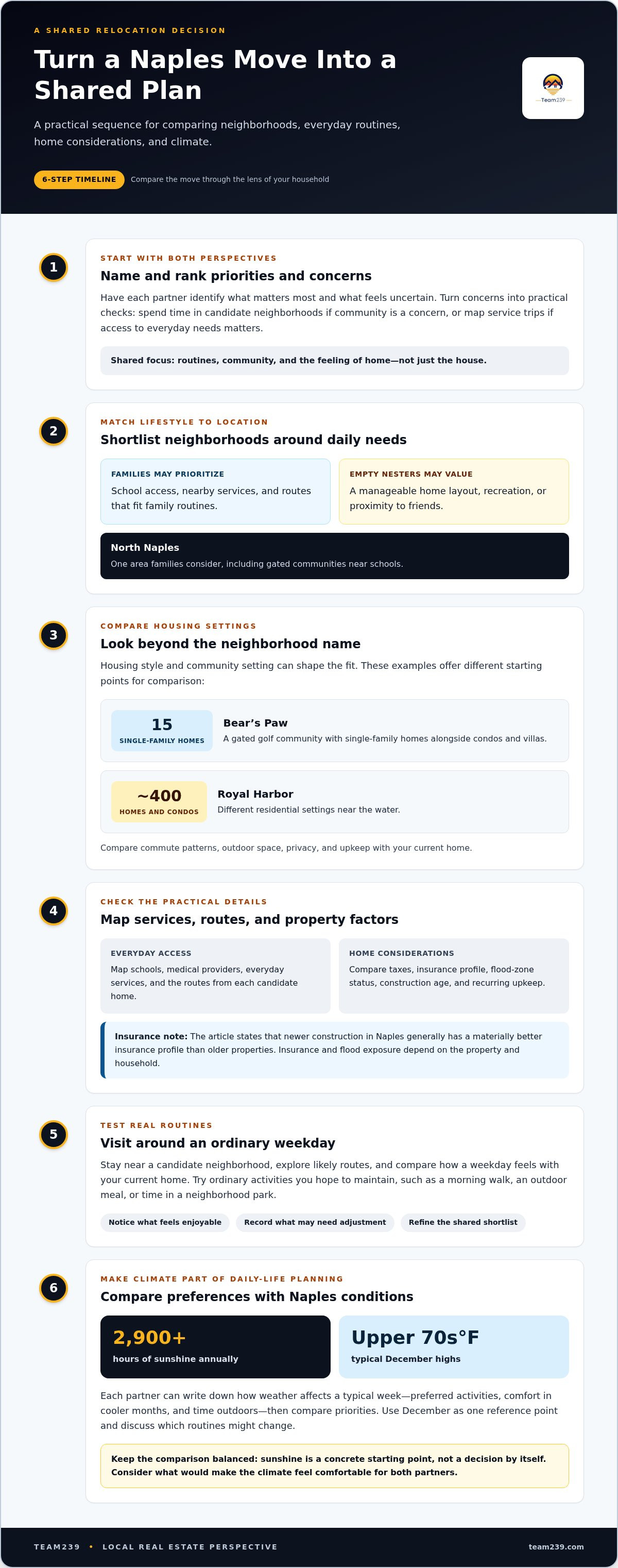
The strongest case for Naples is one your spouse can picture in everyday life, not a list of reasons to say yes. To work out how to convince your spouse to move to Naples, start with the priorities you share, then match them to neighborhoods and the lifestyle each of you wants. Naples receives over 2,900 hours of sunshine annually, and December highs typically reach the upper 70s°F, details that can make the climate part of a practical conversation.
It’s reasonable if your spouse is weighing more than sunshine: a move affects routines, community, and the feeling of home. This guide will help you turn the idea into a balanced discussion rather than a one-sided pitch. You’ll explore how North Naples and other neighborhood choices may suit different life stages, how to talk about Naples’ sunny weather, and how to compare everyday preferences before making a decision together. The goal isn’t to win an argument; it’s to find out whether the right place and lifestyle can work for both of you.
Table of Contents
1. Neighborhoods for families and empty nesters
Choose a Naples neighborhood by matching daily routines to location, housing, and community. Families may prioritize school access and nearby services, while empty nesters may value a manageable home layout, recreation, or proximity to friends. North Naples is one area families consider, including gated communities near schools. The U.S. Census Bureau’s population estimates for July 1, 2025 (V2025) list 417,131 residents.
Housing styles can shape the decision as much as a neighborhood’s name. Bear’s Paw has 15 single-family homes, alongside condos and villas, within a gated golf community. Royal Harbor has about 400 homes and condos, offering different residential settings near the water. Treat these examples as starting points, then compare commute patterns, outdoor space, privacy, and upkeep with your current home. A practical way to approach how to convince your spouse to move to Naples is to discuss which features would improve your shared routines.
To compare Naples schools, healthcare, and family services with your current area, map school options, medical providers, and everyday services near each candidate home. Compare the routes and choices with your existing routines instead of relying on a citywide impression. If you’re considering how to convince your spouse to move to Naples, use this comparison to make each person’s priorities visible.
Taxes, insurance, and flood exposure depend on the property and household. Compare the tax implications of your move, the home’s insurance profile, and its flood-zone status before weighing addresses. Newer construction in Naples generally has a materially better insurance profile than older properties, so include construction age in your comparison.
For a major relocation, each spouse can name and rank priorities and concerns. Turn concerns into practical tests: if one partner worries about community, spend time in candidate neighborhoods; if another prioritizes services, map those trips.
Before committing permanently, plan a Naples visit around ordinary routines, not just sightseeing. Stay near a candidate neighborhood, explore likely routes, and compare how a weekday feels with your current home. Use those observations to refine your shared shortlist.
Compare access from each candidate home to schools, medical providers, and everyday services with the options and routes your household currently uses. This provides a household-specific comparison without assuming Naples is better or worse overall.
2. Naples climate and sunshine
Climate becomes a more useful relocation topic when you connect it to everyday routines. Naples receives over 2,900 hours of sunshine annually, and December highs typically reach the upper 70s°F. Those details can help frame a conversation about winter comfort, time outdoors, and the activities each partner hopes to enjoy. They don’t settle the decision, but they give you concrete starting points.
Make the discussion specific. Each partner can write down how weather affects a typical week: preferred activities, comfort in cooler months, and time spent outside. Then compare those priorities with Naples’ December conditions. For example, if one spouse values a warm winter setting and the other wants familiar seasonal changes, discuss both preferences directly instead of treating sunshine as an automatic advantage.
Use a visit to test the lifestyle, not just the forecast. Pick a few ordinary activities you’d want to maintain, such as a morning walk, an outdoor meal, or time in a neighborhood park. Notice what feels enjoyable and what would require adjustment. A shared list of observations gives you more to discuss than vacation photos or a broad claim that Naples has good weather.
To keep the conversation balanced, each spouse can rate climate priorities separately, then compare answers. Identify where you agree, such as wanting more sunny days, and where you differ, such as preferred routines or seasonal expectations. Ask what would make the climate feel comfortable for both of you. The goal is a practical picture of daily life, not a sales pitch.
Finally, compare the same calendar period in Naples and your current area. Use December as one reference point, since Naples typically reaches upper-70s°F highs then, and discuss how that would change your routines. Write down what you’d try during a longer stay, from morning plans to evening activities. That shared plan can turn sunshine from an abstract promise into a realistic part of your relocation decision.
3. What is the cost of living in Naples, Florida, compared with other U.S. cities?
Compare Naples with your current city using your household’s actual spending, not a broad claim that one place costs less. Build a side-by-side budget with housing, insurance, utilities, transportation, groceries, healthcare, and leisure. For example, a household moving from a city apartment to a Naples home should compare its present rent and utilities with the full ongoing costs of the home it’s considering. The result depends on your choices and routines.
Start with housing, often the largest decision in a relocation budget. Compare the type of home, condition, location, and recurring charges attached to each option. A detached home and a condominium can have different maintenance responsibilities and shared costs, so compare the complete monthly outlay rather than the advertised payment alone. Include insurance and property-related expenses in the same worksheet, then use the same categories for your current home.
Next, list the routine costs your family would carry in either place. Add commuting or other regular transportation, utility use, groceries, healthcare, and the activities you expect to keep. Use recent household statements as the baseline, then identify which expenses would change after moving to Naples. For instance, compare your current commute pattern with the routes you’d actually use from a prospective neighborhood, rather than assuming transportation costs stay constant.
Turn the comparison into a joint decision tool. Each spouse can mark the categories that matter most, such as housing stability, access to healthcare, or room for hobbies. Then create a conservative Naples budget and a second version reflecting preferred choices. Discuss which changes are acceptable and which would strain your plans. This makes the cost conversation specific: you’re comparing a real household budget with a real alternative, not debating whether Naples is simply “expensive” or “affordable.”
4. What are the pros and cons of living in Naples, Florida, year-round?
Naples offers year-round access to outdoor recreation, with more than 80 championship golf courses within driving distance. Lely Resort alone offers 54 holes of championship golf, a clear draw for couples who play regularly. These options can support an active routine beyond occasional visits. Ask whether both partners would use local recreation often enough to make it a meaningful part of everyday life.
Living in Naples year-round also means choosing a home for daily comfort, not just holiday appeal. A property that suits seasonal stays may not fit your needs for storage, maintenance, or access to services throughout the year. Compare those practical details during home tours. For example, discuss whether you prefer a newer home or an older property with features that better match your priorities.
Insurance deserves a close look in that comparison. Newer construction in Naples generally has a materially better insurance profile than older properties. That makes a home’s age and condition relevant to your ongoing ownership plan, alongside its layout and location. Consider how each property fits your household’s tolerance for maintenance and its broader budget, rather than judging a home by appearance alone.
Year-round living also asks both partners to picture ordinary weeks, not only favorite activities. Talk through how you’d spend free time, build community, and handle home responsibilities. Then list the strongest benefit for each person and the concern each would need addressed. A golfer might value Lely Resort’s course options, while a spouse who doesn’t play may care more about other routines and neighborhood fit.
Use those priorities to assess the trade-offs together. Compare homes based on condition, location, recreation, and everyday needs. If golf is central, consider how Lely Resort’s 54 holes fit your plans; if not, focus on the features both partners would enjoy. A balanced decision weighs specific benefits against the realities of maintaining a year-round home in Naples.
Team239: Residential Resale Representation
Team239 offers Residential Resale Representation for couples ready to explore existing homes in Naples. If your conversations have clarified preferred neighborhoods, home features, and everyday priorities, this service can help connect those preferences to a property search. For buyers considering a newly built home, Team239 also provides New Construction Buyer Representation. Relocation Consulting can help you organize the move around your household’s goals, while Luxury Property Listing Services may fit sellers preparing to market a luxury home.
Turn to Team239 when you’re ready to translate your shared priorities into a focused real estate plan. The next step is a conversation about your Naples move and the home options you’re considering. Contact Team239 to discuss your plans.
Make the Next Step a Shared Decision
A move works best when both partners can see their priorities reflected in the plan. Instead of treating the conversation as a yes-or-no vote, agree on what a successful move would need to make possible for each of you. Write down your shared goals, the concerns still unresolved, and the decisions that need more thought.
This approach changes how to convince your spouse to move to Naples: focus on building a decision together, not winning an argument. Set a point to revisit the discussion after you’ve worked through the open questions. If your plans are taking shape, professional real estate guidance can help connect your household’s priorities to the next steps in Naples.
Contact Team239 to discuss your Naples plans and explore a path forward that feels considered and shared. A thoughtful conversation is a strong place to begin.
Frequently Asked Questions
What are typical home prices and rents in Naples, Florida?
Home prices and rents in Naples vary by property type, condition, location, and features. To compare options, define your household’s needs first, then assess homes with similar characteristics rather than comparing a condo with a detached home. For rentals, consider the lease terms and included services alongside the monthly payment. This gives you a more useful picture of how each choice fits your plans.
What are the best neighborhoods in Naples, Florida, for different budgets and lifestyles?
The best neighborhood depends on the home type and lifestyle you’re prioritizing. North Naples may suit families focused on school access, while Bear’s Paw and Royal Harbor offer different residential settings and home formats. Compare candidate areas by the specific homes available, daily routes, and the activities you expect to enjoy. A shared shortlist helps couples weigh preferences without assuming one neighborhood suits every budget.
How do Naples schools, healthcare, and other family services compare with our current area?
Compare school options, medical providers, and everyday services near each candidate home with the choices and routes your household currently uses. This gives you a household-specific comparison without assuming Naples is better or worse overall.
Comments