
Luxury Homes in Florida: Features That Define High-End Living
A waterfront address alone doesn’t make a Florida home luxurious. What defines a luxury home in Florida is the combination of a distinctive setting, thoughtful architecture, refined finishes, and amenities that make indoor-outdoor living feel effortless. Smart technology, privacy, and features tailored to how people live add to the picture.
It’s easy to focus on grand views or impressive interiors, but high-end living is about how these elements work together. A home should feel connected to its surroundings and designed for everyday comfort, not simply make a statement.
This article explains how waterfront settings, outdoor spaces, architecture, custom details, and technology shape luxury homes across Florida. You’ll also see why waterfront status alone isn’t the whole story and what to consider when weighing a home’s features against the lifestyle you want.
Table of Contents
Luxury Real Estate: What Makes a Property High-End?
Florida luxury homes bring together location, property quality, design, and lifestyle amenities.
Florida Luxury Market Locations and Property Types
Florida’s luxury market spans coastal destinations and inland cities, with property types shaped by their settings. Miami Beach, Naples, and Palm Beach are coastal examples; Miami, Orlando, and Tampa add urban options. Listings include waterfront estates, high-rise condos, golf-course homes, gated-community residences, and villas. This variety matters because a luxury label means different things across property types and local markets.
There isn’t one price cutoff that defines luxury across Florida and the nation. The 2025 state threshold offers a broad benchmark, while local listings show how sharply prices can vary. A statewide listing count would also combine estates, condos, and villas with different buyer profiles. Compare properties within the same city and type to make a more meaningful assessment.
Architectural Styles and Luxury Features
Florida luxury architecture ranges from Mediterranean-inspired villas to contemporary coastal homes and formal estates. Style matters most when it suits the setting, floor plan, and construction quality. Look for coherent design, considered materials, and amenities suited to daily use, rather than treating a single finish as proof of quality.
Building and hurricane-resistance requirements depend on a property’s location, construction, and applicable code provisions. Review permit and inspection records alongside the home’s design and condition. A polished exterior alone doesn’t explain how a property was built or whether its features align with applicable requirements.
Location and Luxury Home Values
Location can shape both a home’s lifestyle appeal and its position in the local market.
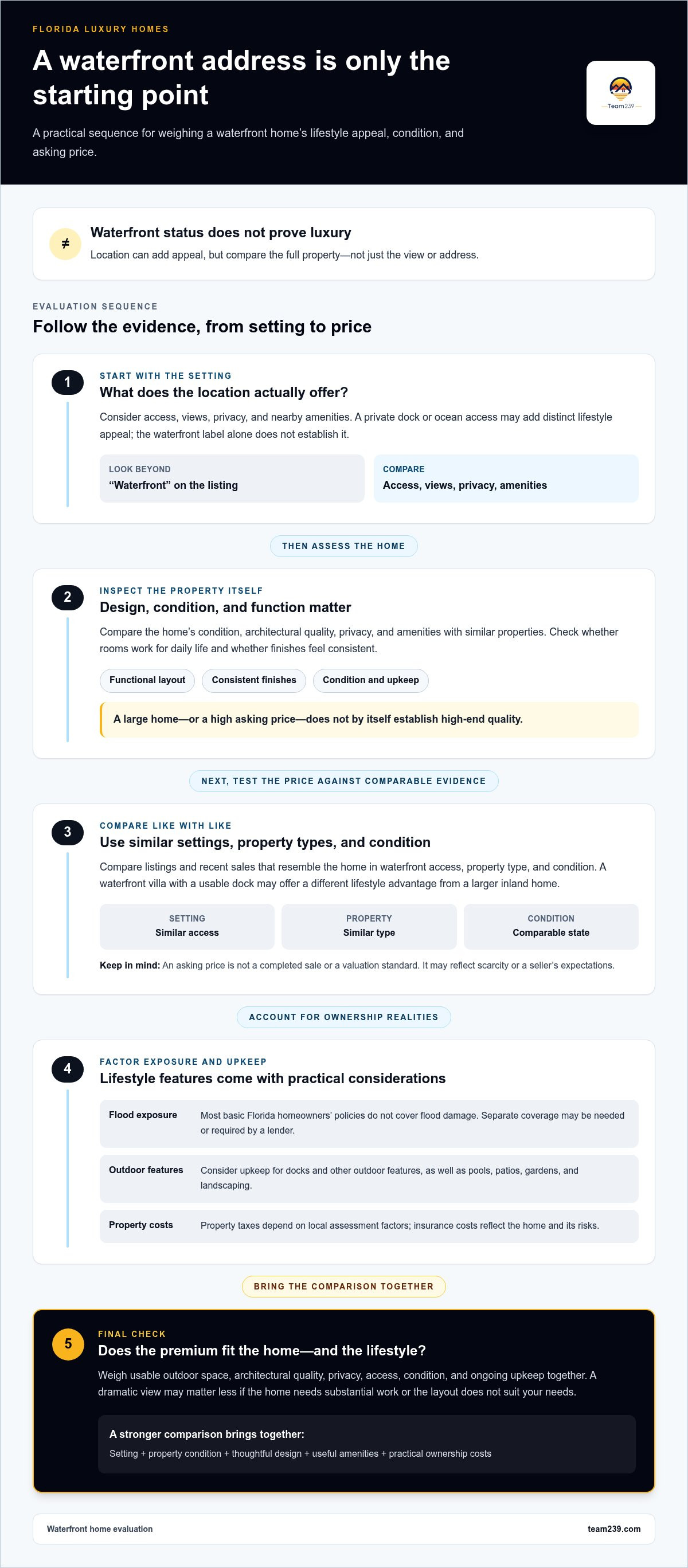
Waterfront, oceanfront, and golf-course settings influence appeal through access, views, privacy, and amenities. A waterfront address alone doesn’t make a property luxurious; private docks, ocean access, and a premium location can add appeal. When assessing an investment or rental, consider location, condition, amenities, and likely upkeep together. Property taxes depend on local assessment factors, while insurance costs reflect the home and its risks. Most basic Florida homeowners’ policies don’t cover flood damage, so separate flood coverage may be needed or required by a lender.
Are waterfront properties always considered luxury?
No. In South Florida, a waterfront home with a private dock, ocean access, and a premium location may signal luxury, but waterfront status alone isn’t enough. Compare the property’s condition, design, privacy, amenities, and location with similar homes. A high asking price may reflect scarcity or a seller’s expectations, not proven market value. An asking price is not a completed sale or a valuation standard.
Compare listings and recent sales with similar settings, property types, and condition. A large house with multiple bedrooms and bathrooms may suit multigenerational living, but size alone doesn’t establish high-end quality. Check whether the layout makes the rooms functional, whether finishes are consistent, and whether maintenance needs fit the asking price. A waterfront villa with a usable dock may offer a distinct lifestyle advantage over a larger inland home, depending on what buyers value.
Waterfront access also brings practical considerations. Flood exposure, insurance coverage, upkeep, and the condition of docks or other outdoor features can affect ownership costs and comfort. Most basic homeowners’ insurance policies in Florida don’t cover flood damage; separate coverage may be needed or required by a lender. Buyers should account for the home’s replacement value and contents, while valuable art, jewelry, and antiques may need specialized coverage. Pools, patios, gardens, and landscaping also require regular upkeep.
New construction and renovated homes can both qualify as luxury properties. In South Florida, new construction may appeal when it combines modern design, energy efficiency, and advanced technology. A renovated home can also stand out if it occupies a prime location and its improvements support the property’s quality. Compare materials, layout, systems, and consistency of finishes. Don’t treat “new” or “renovated” as a substitute for examining the home itself.
Ask how the asking price relates to the property’s setting and features, not just its status. A private dock, ocean access, architectural quality, privacy, and usable outdoor space can add meaningful appeal. A dramatic view may matter less if the home needs substantial work or the layout doesn’t suit your lifestyle. Compare similar properties, including waterfront access and condition, before deciding whether a premium is supported.
For buyers considering new construction, new construction buyer representation can help connect design choices and property features to the intended lifestyle. A clear comparison of location, build quality, and amenities helps separate a compelling home from a costly label.
Indoor-outdoor living and outdoor amenities
Florida luxury homes are designed to support outdoor enjoyment throughout the year. The strongest layouts connect patios, pools, and interior living areas.
Indoor-Outdoor Living
Indoor-outdoor living connects rooms with usable exterior spaces through features such as wide doors, covered patios, and outdoor dining areas. In Florida, this connection can make a home comfortable for changing weather and everyday routines. Consider how the kitchen, living room, and patio relate. A short, direct route makes outdoor meals or poolside relaxation easier.
For example, compare a home where sliding doors open from the living room onto a shaded terrace with one where the patio sits apart from daily living areas. The terrace may work better for entertaining, while screened spaces can offer more protection. Consider sun exposure, shade, privacy, and circulation together. These details show whether the layout supports your lifestyle beyond the listing photographs.
Outdoor and Estate Amenities
Outdoor amenities include pools, gardens, patios, and landscaped grounds. Their value depends on how well they serve daily use and fit the property. A pool beside an outdoor lounge can create a cohesive space, while a large garden may offer privacy or room to gather. Each feature also adds upkeep.
Consider the full estate experience, not just a headline feature. An outdoor kitchen, shaded seating, or a private garden can support different activities, but each needs suitable placement and maintenance. Florida homeowners should plan for regular care of landscaping, gardens, pools, and patios. The decision involves both enjoyment and ongoing responsibility, especially when a property has several specialty features.
Building, Community, and Resort Amenities
Building and community amenities extend a home’s lifestyle beyond its private rooms and grounds. A Florida condominium may have shared spaces such as a pool, fitness room, or resident lounge. A gated community may offer landscaped common areas or recreational facilities. These features can feel exclusive, but their usefulness depends on access, condition, and how well they fit your routines.
Resort-style amenities can bring recreation and relaxation closer to home. A community pool, for instance, may complement a private patio, while walking paths can make shared grounds part of everyday life. Compare the amenities at the property with those in its building or community. Then consider the upkeep involved, including shared landscaping and private pools. Luxury real estate is more than a feature list; it’s how the spaces work together.
In Florida’s real estate market, outdoor features deserve practical review alongside visual appeal. Walk from the main living area to each patio, garden, or pool, and note privacy, shade, and access. A beautiful terrace that feels exposed may serve differently from a screened lanai. This comparison helps clarify which amenities support your lifestyle and which mainly enhance presentation.
Distinctive architecture and custom finishes
Architecture shapes how a Florida luxury property looks, functions, and relates to its setting. During a transaction, assess the overall design, not just individual features.
Distinctive Architectural Design
Distinctive architecture carries a clear design concept through the home’s layout, proportions, and materials. A coherent design can make rooms feel connected and purposeful. In Naples or Marco Island, a formal estate may express its setting differently from a contemporary coastal property. Compare the exterior, room flow, natural light, and relationship to the site.
Florida luxury listings can feature Mediterranean-inspired villas, contemporary homes, and traditional estates. A style label alone says little about execution. Check whether the roofline, windows, and outdoor transitions work together. For example, large openings facing a garden can connect indoor entertaining areas with the landscape. A well-planned floor plan should also distinguish private rooms from shared living spaces.
Consider how the design supports everyday use. Walk through the home from the entrance to the kitchen, main living area, and private rooms. Note awkward transitions, limited natural light, or spaces that feel disconnected. For new construction, examine the proposed layout and materials together. For an existing property, compare the visible design with its condition and renovation history.
Custom Finishes
Custom finishes are details selected to give rooms a consistent, tailored character. Craftsmanship and fit affect how a home feels beyond its listing photographs. Examine cabinetry, stone surfaces, flooring, hardware, and lighting in context. A carefully finished kitchen, for example, should feel coordinated with nearby living spaces rather than designed as a standalone showpiece.
Look closely at transitions between materials. Check where wood flooring meets tile, how cabinetry aligns, and whether fixtures suit the room’s scale. These observations help distinguish a cohesive finish plan from a collection of expensive upgrades. In a renovated Naples or Marco Island property, consider how visible updates relate to the home’s architecture and overall condition.
Luxury property quality isn’t measured by material names alone. Consider durability, workmanship, maintenance needs, and how each finish supports the home’s design. A natural stone surface may create a focal point, while well-fitted storage can improve everyday function. During a showing, note uneven edges, inconsistent finishes, and details that appear unfinished.
For buyers and sellers, expertise matters when communicating design value during a transaction. Sellers can clearly present the relationship between architectural choices and custom finishes. Buyers can use the same details to compare properties beyond their photographs. Reviewing layout, craftsmanship, and condition gives each design decision context and helps a home’s distinctive qualities stand out without relying on luxury labels alone.
What features define a luxury home in Florida?
A luxury home brings location, privacy, design, technology, and lifestyle amenities together. In South Florida, buyers prioritize these qualities alongside outdoor living and wellness features. No single upgrade defines the category. The overall experience matters: how a home supports daily routines, protects privacy, and connects its spaces.
Start with the setting and how the property makes use of it. A secluded home, for example, may offer privacy through its layout and landscaping. A gated entrance or guard service can add another layer of security at some Southwest Florida properties. Consider how these features work together rather than treating an impressive entrance as proof of quality.
Technology should solve practical needs. Smart home systems can connect lighting, climate controls, and other household functions. Dedicated offices and technology-enabled spaces are common features in luxury properties, supporting remote and hybrid work. During a showing, assess how the office fits into the home: consider privacy, natural light, and separation from busy living areas.
Wellness amenities can include spaces for exercise, relaxation, or outdoor enjoyment. A private fitness area, for instance, may make daily movement convenient, while a calm garden provides room to unwind. Evaluate these features by their placement and usability. A wellness room beside a noisy entertainment area may serve a different purpose from a quiet, separate space.
Review the systems behind the visible features. Advanced automation may need regular maintenance and occasional upgrades. Consider whether the controls are intuitive and whether lighting, climate, and security systems work together. A sleek control panel means little if everyday functions are difficult to manage. Assess technology as part of the home’s practical design.
Use a consistent framework to compare properties: location, privacy, design, smart technology, and amenities. For example, compare how homes handle office privacy, entry security, and outdoor relaxation. Then consider upkeep, especially for pools, gardens, and sophisticated home systems. What defines a luxury home in Florida is how well these elements support the lifestyle you want, not simply how many features it has.
Take the next step in your Florida home search by comparing homes against the features that matter most to you.
Team239: Residential Resale Representation
Team239 helps buyers and sellers assess luxury homes through Residential Resale Representation and Luxury Property Listing Services. Turn to the team when comparing an existing home’s location, condition, design, and amenities, or when preparing a luxury property for the market. For buyers considering a newly built home, New Construction Buyer Representation can support the search and evaluation process. Relocation Consulting can help connect a move to the right residential options in Southwest Florida.
Use your priorities as a starting point: waterfront access, privacy, outdoor living, architecture, or smart technology. Team239 can help bring those preferences into the property search or listing strategy. Contact Team239 to discuss your real estate goals, or visit team239.com.
Make Your Next Move With Clarity
Your next step is to turn broad preferences into a clear decision framework. Decide which qualities matter most in daily life, which are flexible, and which could create ongoing work. Understanding what defines a luxury home in Florida is only the starting point; the right choice must also fit your plans, comfort, and priorities over time.
Before you move forward, write down your non-negotiables and the trade-offs you can accept. That makes it easier to compare properties consistently and keep attention on what matters to you, rather than getting distracted by presentation alone. For a purchase or sale, Team239 can help you shape the next step around your real estate goals.
Contact Team239 about luxury homes to discuss your plans. A thoughtful decision starts with knowing what you want your next home to make possible.
Frequently Asked Questions
What Defines a Luxury Property in Today’s Market?
A luxury property combines an exceptional location, quality, privacy, and features suited to a particular lifestyle. Its position depends on the local market, so compare it with similar homes nearby rather than relying on a statewide cutoff. Assess whether the layout, condition, and amenities support the asking price. In Southwest Florida, compare similar properties in Naples, Bonita Springs, Estero, Marco Island, or Fort Myers.
What features do luxury buyers prioritize most today?
Luxury buyers often prioritize location, privacy, modern design, smart technology, and lifestyle amenities. To see how well a property meets those priorities, picture a typical day: where you work, host guests, relax, and store personal items. A home with a quiet workspace may suit remote work, while distinct guest areas may better support frequent visitors. The best fit depends on how you’ll use the property.
What architectural styles and amenities are common in Southwest Florida luxury homes?
Southwest Florida luxury homes include contemporary coastal designs, Mediterranean-inspired villas, and traditional waterfront estates. Amenities vary by property and may include private docks, infinity pools, beautifully landscaped grounds, fitness spaces, and outdoor entertaining areas. Evaluate how each element fits the home’s layout and your routine. A fitness room near a private entrance, for instance, may serve differently from one adjoining shared living areas. Assess the overall design, not just the feature list.
How do luxury home prices and features compare across Naples, Bonita Springs, Estero, Marco Island, and Fort Myers?
Prices and property types vary significantly across Southwest Florida's premier communities. While Naples and Marco Island often feature high-end beachfront estates and deep-water boating properties, inland and coastal areas like Bonita Springs, Estero, and Fort Myers offer spacious gated golf communities and riverfront properties with unique lifestyle appeals. Understanding these micro-markets is essential when determining **what defines a luxury home in Florida**.
All content provided by Team239 is for informational and entertainment purposes only. Team239 makes no representations as to the accuracy or completeness of information on this site or on linked pages. Information is subject to change; consult Team239 directly or another licensed real estate professional for expertise specific to your situation. Team239 is not liable for errors or omissions in this information, the availability of this information, or any losses, injuries, or damages resulting from its display or use.
Comments