
Checklist for Selling a House in Florida: Your 2026 Guide

What if the first step in selling your Florida home isn’t fixing it up, but deciding what needs attention first? A clear checklist for selling a house in Florida can help you avoid rushed decisions, missed paperwork, and pricing choices made without a plan.
Selling involves more than preparing rooms for photos. You’ll need to organize the process, gather relevant records, and shape a pricing and marketing approach around your property and goals. It’s reasonable to feel unsure about the right order, especially when property details and community requirements vary.
This guide lays out a manageable path from early preparation to closing. You’ll see how to assess your home, plan updates, gather records, consider pricing and marketing, and keep track of offers and transaction steps. Sellers in Naples, Bonita Springs, Estero, Marco Island, and Fort Myers can use local guidance to connect each decision to the next.
Table of Contents
Florida Home-Selling Checklist: Start With the Decisions That Shape Your Sale
Prepare a Florida Home for Sale: Repairs, Records, and Presentation
Choose a Pricing and Marketing Plan That Fits Your Florida Home
Florida Seller Checklist for Disclosures, Offers, and Closing Preparation
Finish Your Florida Selling Checklist With a Clear Local Next Step
Florida Home-Selling Checklist: Start With the Decisions That Shape Your Sale
Start with the decisions, not a repair list. A practical checklist for selling a house in Florida can begin with four connected workstreams:
Define your goals: clarify what matters most and how a sale fits your plans.
Prepare the property: identify maintenance needs and presentation priorities.
Plan the listing: consider pricing, marketing, and showing arrangements.
Organize the transaction: collect records and keep questions, documents, and key dates in one place.
These steps don’t follow the same schedule for every seller. Your property’s condition, priorities, and current local conditions can all affect what to tackle first. A Naples condominium may require different early planning from a detached home with a pool, waterfront features, or recent improvements. Start with what’s specific to your property. For a broader local walkthrough, explore this Naples home-selling guide.
Set your sale goals before preparing the property
Decide what a workable sale looks like for you. Is timing the main priority, or would you rather focus on convenience, presentation, or coordinating a future move? Your answer can shape preparation and listing choices, but it can’t guarantee a particular price, timeline, or result.
Write down practical details that could affect the plan, including whether you’ll remain in the home during the sale, when you’d prefer showings, and any scheduling or access considerations. If you’re coordinating a move, note which decisions depend on one another. This list makes it easier to discuss options with your real estate representative and adjust as circumstances change.
Build a working file for your Florida home sale
Gather available records in one secure, easy-to-find place. A useful starting file may include ownership and property information, records of improvements or repairs, warranties or manuals, maintenance history, and relevant community or association documents. Keep what you have and make a short note of anything missing or unclear so it can be reviewed with the appropriate professional.
Then draft a concise, factual summary of the home. Note features that are actually present, such as a screened lanai, pool, updated appliances, or waterfront access, and describe completed work accurately. Avoid overstating upgrades or hiding known issues. If a question touches on title, taxes, or another legal matter, an overview of Florida property law can provide general context, but it isn’t a substitute for advice tailored to your situation.
This early groundwork creates a useful starting point for the next decisions: what preparation makes sense, how to present the property, and what information to keep organized as the sale progresses.
Prepare a Florida Home for Sale: Repairs, Records, and Presentation
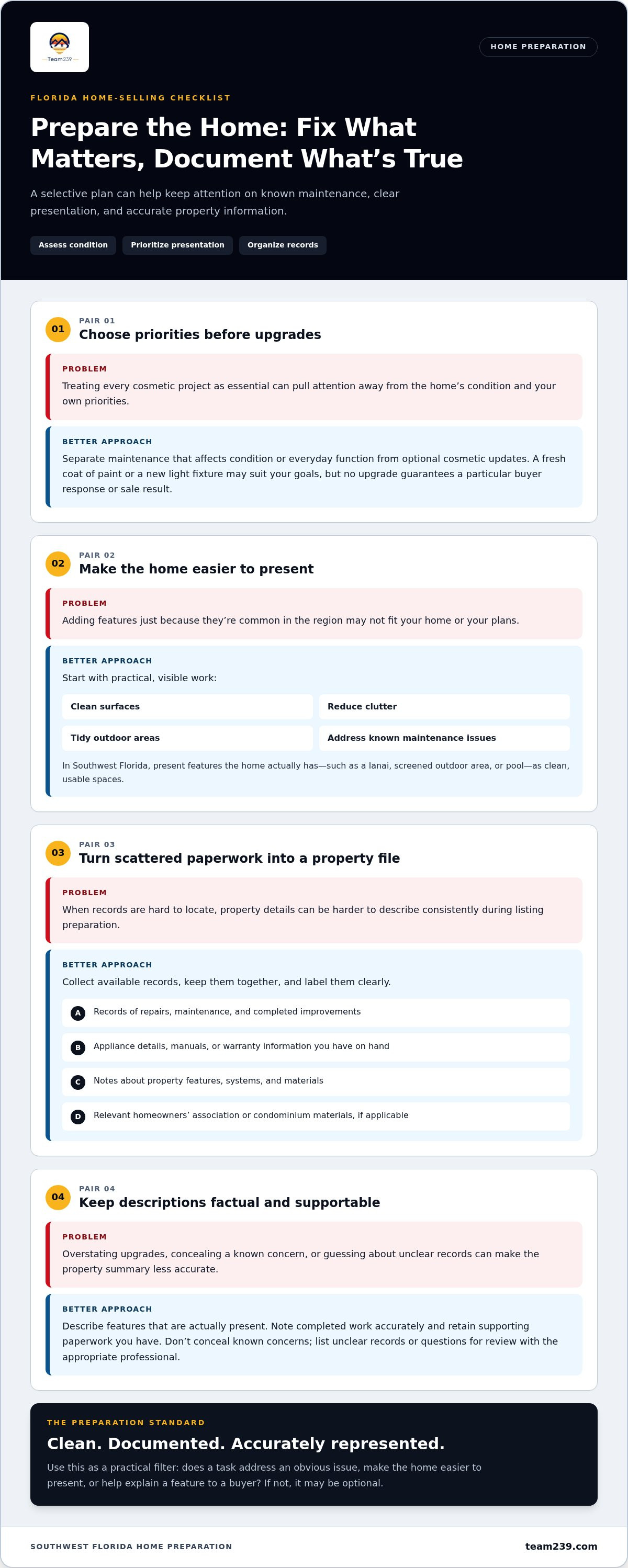
Preparation works best when it’s selective. Separate maintenance that affects the home’s condition or everyday function from optional cosmetic updates. A fresh coat of paint or a new light fixture may suit your goals, but no upgrade guarantees a particular buyer response or sale result. For a checklist for selling a house in Florida, focus first on what you can assess and document clearly.
Use a practical filter for each task: Does it address an obvious issue, make the home easier to present, or help explain a feature to a buyer? If not, it may be optional. Statewide housing research can offer broader context, but it can’t determine whether a specific project makes sense for your property. The University of Florida Shimberg Center for Housing Studies provides Florida housing data and analysis; use that context thoughtfully rather than as a prediction for your home.
Prioritize cleaning, repairs, and curb appeal
Start with practical, visible work: clean surfaces, reduce clutter, tidy outdoor areas, and address maintenance issues you already know about. In Southwest Florida, consider how to present features your home actually has, such as a lanai, screened outdoor area, or pool. Focus on clean, usable spaces rather than adding features simply because they’re common in the region.
Discuss possible improvements in light of your priorities and the property’s condition. A small, targeted repair may make more sense than a major cosmetic project, but the right choice depends on the home and your plans. A listing-ready home is clean, documented, and accurately represented.
Gather property and community records
Collect available records that help you describe the home and its upkeep. Keep documents together and label them clearly so details are easy to locate as listing preparation moves forward. Useful items may include:
Records of repairs, maintenance, and completed improvements
Appliance details, manuals, or warranty information you have on hand
Notes about property features, systems, and materials
Relevant homeowners’ association or condominium materials, if applicable
Keep descriptions factual. If work was completed, note what was done and retain any supporting paperwork you have. If you’re aware of a concern, don’t conceal it or describe it more broadly than you can support. Make a separate list of unclear records or questions, then flag them for review with the appropriate professional rather than guessing at what a document means.
A well-organized file can support consistent property descriptions and make it easier to answer questions during the listing process. Team239 provides residential seller representation in Naples, Bonita Springs, Estero, Marco Island, Fort Myers, and surrounding Southwest Florida communities. Learn more about Team239’s Southwest Florida real estate guidance.
Choose a Pricing and Marketing Plan That Fits Your Florida Home
Pricing and marketing work best as one plan. The price shapes how buyers may compare the home, while the presentation helps them understand what’s being offered. As you work through a checklist for selling a house in Florida, consider how much of the process you want to manage yourself and where professional listing representation can support your decisions.
A seller-led approach gives you direct responsibility for research, listing materials, inquiry responses, and showing arrangements. Professional representation can help organize pricing discussions, marketing, negotiations, and transaction steps. Neither path guarantees a particular result. The right fit depends on your experience, availability, preferences, and property.
Use local market evidence carefully
Comparable properties provide context, not a guaranteed valuation or forecast. Consider how the homes compare in property type, condition, location, and features, then use recent comparable activity as one input to a pricing discussion. A Naples home shouldn’t automatically be assessed using activity from Bonita Springs, Estero, Marco Island, or Fort Myers. Nor should Sarasota or statewide figures stand in for current evidence about a specific Southwest Florida property.
Ask how each comparison differs from your home and why that difference may matter. A pricing discussion is more useful when it reflects your property and its local context rather than relying on a single headline figure.
Compare responsibilities before choosing a plan
Use this simple comparison to identify what you’ll manage directly and where listing representation may help organize the work. Responsibilities vary with the approach and the agreements involved.
Planning area
Seller-led approach
Professional listing representation
Pricing inputs
Research comparable activity and decide how to interpret it.
Review local comparisons and organize a pricing discussion around the property and your goals.
Marketing tasks
Prepare descriptions and listing materials, then manage promotion.
Coordinate listing presentation and marketing activities with you.
Seller responsibilities
Manage inquiries, showing logistics, and follow-up directly.
Work with your representative on decisions, access, and communication throughout the process.
Plan listing materials and showing logistics
Before the home is presented to buyers, align the facts across its description and marketing materials. Describe features accurately, use clear photography, and decide how showing requests will be handled. Set a process for receiving inquiries and tracking questions so responses stay consistent. Showing availability should fit your household’s needs; think through access, timing preferences, and practical limits in advance.
Consistent, factual presentation helps buyers understand the property and gives you a clearer way to respond as interest develops. Team239’s residential seller representation connects listing preparation, marketing, negotiations, and transaction coordination for sellers in Southwest Florida.
Florida Seller Checklist for Disclosures, Offers, and Closing Preparation
Keep the transaction organized, not scattered across inboxes, texts, and loose papers. A checklist for selling a house in Florida can help you track the moving pieces while leaving situation-specific legal, tax, and financial questions to the appropriate professionals. Transaction details may vary with the property and circumstances, so treat this as an organization tool, not a statement of legal obligations or financial advice.
Organize disclosures and property information
Use a consistent process to share relevant property information honestly and completely. Gather records that may help explain the home, its features, past work, or known concerns. Keep copies of documents you share, note when and how they were provided, and save related communications in the same transaction file.
Disclosure and closing questions should be reviewed for the specific transaction. If you’re unsure what information belongs in a form or how to describe a property detail, write down the question instead of guessing. Have current requirements checked against authoritative sources and get guidance from a licensed real estate professional or another appropriate adviser.
Prepare for offers and closing coordination
Once offers arrive, record the details in a format that makes comparisons easier. Keep each offer document and note its terms, dates, requested documents, questions, and next actions. Track updates as they happen, including who is following up and what still needs attention. This creates a useful record without relying on memory or treating one offer term in isolation.
Save each offer and related communication together.
Note important dates and any response or document deadlines.
Record questions that need review before you decide or respond.
Update the file as agreed actions are completed or circumstances change.
Title, escrow, insurance, and closing arrangements depend on the transaction. Keep related instructions and documents together, and direct questions about their meaning or effect to a licensed real estate professional or the relevant qualified adviser. Team239 provides seller representation and helps coordinate listing and transaction steps in Southwest Florida.
All content provided on the Naples Florida Real Estate Channel and other associated social media platforms is for informational/entertainment purposes only. The owner of Naples Florida Real Estate makes no representations as to the accuracy or completeness of any information on this site or found by following any link on this site. Information provided is subject to change; please consult Kristin and Jonathan directly or another licensed real estate agent to receive the best expertise for your specific situation. The owner of Naples Florida Real Estate will not be liable for any errors or omissions in this information nor for the availability of this information. The owner will not be liable for any losses, injuries, or damages from the display or use of this information.
Finish Your Florida Selling Checklist With a Clear Local Next Step
A checklist is most useful when it reflects your home, priorities, and unanswered questions. Turn the work you’ve done into a personal action list: what’s complete, what still needs attention, and which decisions are coming next. This makes your checklist for selling a house in Florida a working plan, not just a reference you read once.
Turn the checklist into a personal selling plan
Review your notes and sort each item by status. Mark completed tasks, assign follow-ups, and record questions that need professional input. For example, a property record you’re still locating can stay on the follow-up list, while a decision about showing arrangements can be marked as upcoming. Keep important documents and messages connected to the relevant task so you can find the context later.
Completed: work finished or information gathered.
Open: records to locate, questions to resolve, or tasks still underway.
Upcoming: decisions or actions that depend on another step.
Revisit the plan as you learn more about the property or your priorities change. You may adjust presentation plans, revisit how you want to manage showings, or add a question after reviewing a document. There’s no universal timeline that fits every seller, so focus on keeping the next action clear rather than forcing the process into a fixed schedule.
If selling is part of a move, include that transition in your planning. Your preferred destination, housing needs, and moving arrangements may affect the choices you’re weighing around the sale. For ideas and local context as you plan a move to the area, review the Southwest Florida relocation guide.
Get local guidance from Team239
Seller representation can bring pricing discussions, listing preparation, marketing, negotiations, and transaction coordination into one connected process. Team239 REALTORS® Kristin Van Heukelom and Jonathan Van Heukelom work with residential sellers in Naples, Bonita Springs, Estero, Marco Island, Fort Myers, and surrounding Southwest Florida communities. Their local knowledge helps connect your priorities and property details to the decisions ahead.
Bring your action list, open questions, and key property details into the conversation. That gives you a practical starting point for discussing which decisions matter most to your sale and how to organize the next steps.
Ready to talk through your Florida home sale? Call or text Team239 at 239-571-7082 or 239-399-1175 to discuss local seller representation and your next step.
Take Your Next Selling Decision With Confidence
Your next step doesn’t need to solve the entire sale. Choose one open question from your checklist, clarify what information would help you decide, and keep the rest of your plan flexible as the details come into focus. A checklist for selling a house in Florida is most useful when it helps you move forward one informed decision at a time.
Kristin Van Heukelom and Jonathan Van Heukelom, REALTORS® with Team239, provide residential seller representation in Naples, Bonita Springs, Estero, Marco Island, Fort Myers, and surrounding Southwest Florida communities. They can help you consider how your priorities connect to the listing and transaction process.
Ready to discuss your next step?Call or text Team239 to discuss your Southwest Florida home sale. Bring your questions and current action list to start a conversation about your next steps.
Frequently Asked Questions
What should I do first when selling a house in Florida?
Start by defining what you need the sale to accomplish. Write a short brief with your preferred move plan, occupancy needs, decision-makers, and questions that could affect preparation. This gives you a practical filter for later choices, such as whether to schedule an improvement or how to handle access. A checklist for selling a house in Florida should reflect your priorities, not assume every home follows the same sequence.
Do I need a real estate agent to sell my house in Florida?
You can choose to manage a seller-led sale or work with a real estate agent; the best fit depends on how much of the process you want to handle. Consider who will coordinate buyer inquiries, discuss offer terms, and keep transaction steps moving. Team239 REALTORS® Kristin Van Heukelom and Jonathan Van Heukelom provide residential seller representation and local guidance in Southwest Florida. For questions about your specific situation, consult a licensed real estate professional.
What disclosures should a Florida home seller prepare?
Gather information about known property conditions, past repairs, water or flood history, insurance claims or assistance related to damage, and relevant community rules. Keep supporting records with your notes, and avoid guessing when a detail is unclear. The forms and information relevant to a sale can depend on the property and circumstances. Confirm current requirements and the wording of any disclosure documents with an authoritative source or licensed real estate professional.
How do I price my house for sale in Naples or Southwest Florida?
Ask for a property-specific pricing discussion based on comparable homes and explainable differences, not a broad regional average. Compare similar property types and consider how condition, location within a community, layout, and features affect the comparison. Listing prices show what sellers are asking, not necessarily what a home will sell for. In Naples or nearby communities such as Bonita Springs, Estero, Marco Island, and Fort Myers, ask how the selected examples relate to your property before settling on a strategy.
Should I make repairs before selling my Florida home?
Not every repair or upgrade needs to happen before listing. First separate issues that affect function or could raise questions from cosmetic changes that are mainly personal preference. For example, document a recurring air-conditioning issue and consider whether it needs attention, while treating decorative updates as a separate choice. Weigh each task against your goals and the home’s condition. Keep records of completed work, and describe both repairs and known concerns accurately.
How do showings and offers work when selling a house in Florida?
Showings let prospective buyers view the home, so decide how requests will be received, who can authorize access, and what household arrangements matter, such as pets or work-from-home schedules. Offers are written proposals with terms to review, not just a price. Compare details such as proposed timing, conditions, requested items, and documents, then note questions before responding. A real estate representative can help explain the process and coordinate communications.
What should I bring or prepare for a Florida home closing?
Ask the closing professional handling your transaction for a property-specific list and instructions. As a starting point, locate identification, the latest transaction communications, any requested paperwork, and keys, garage remotes, or access devices that will transfer with the home. Confirm how and when documents will be signed, and keep your contact details current for follow-up. Requirements can vary, so use the closing team’s directions rather than relying on a generic checklist alone.
Comments