
Handling a Low Home Appraisal in Florida: 2026 Guide

A low appraisal doesn’t automatically end a Florida home sale. It does create a decision point: check the valuation, then choose a response that fits your role and contract. If you’re asking “what to do if my home appraisal is low in Florida,” start by comparing the appraised value with the agreed price and reviewing what your financing and contract terms allow.
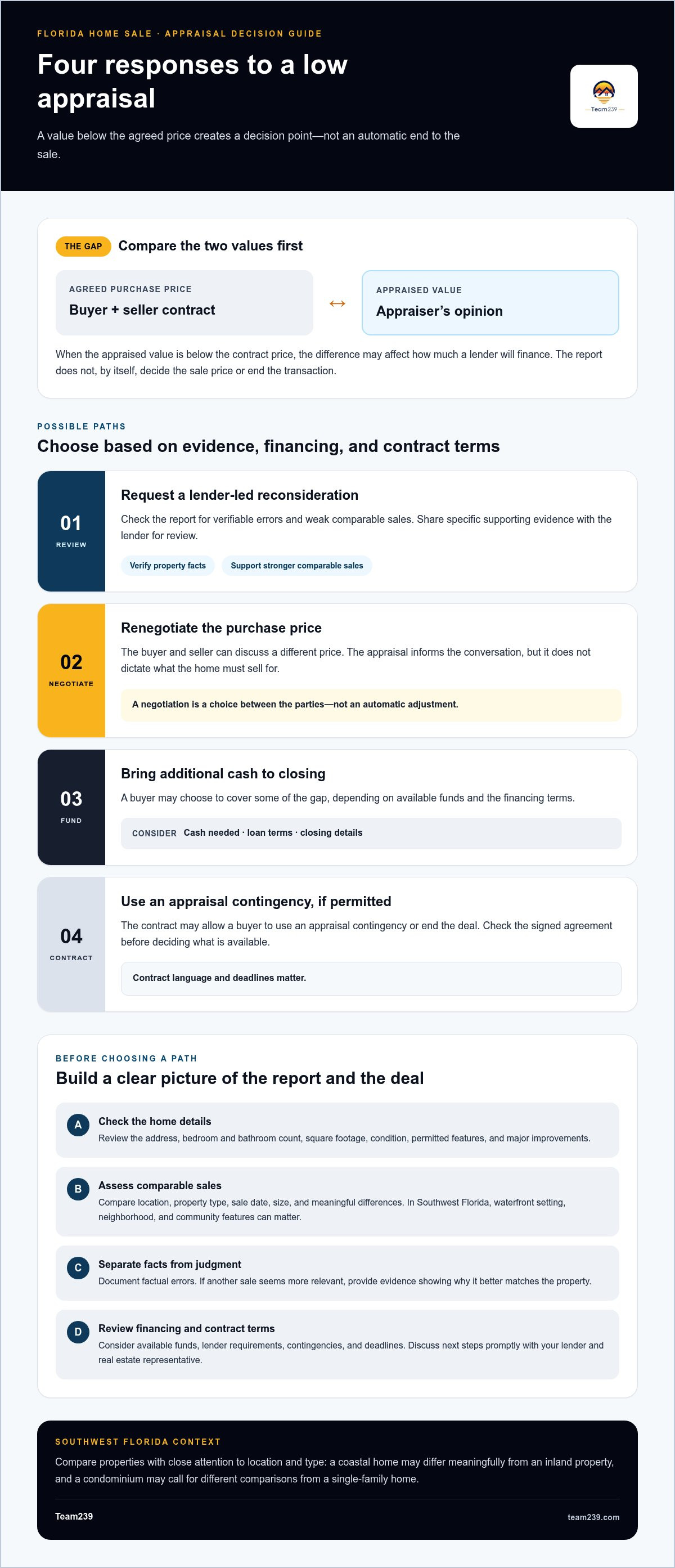
The gap can affect how much a lender will finance, leaving the buyer and seller to weigh their next move. You may be able to request a reconsideration of value through the lender, negotiate a different price, bring additional cash to closing, or use an appraisal contingency if the contract permits. Each option has different trade-offs, and deadlines matter.
This guide explains why an appraisal may come in low, how to spot factual errors or weak comparable sales, and which local sales may offer stronger context in Southwest Florida communities such as Naples, Bonita Springs, Estero, Marco Island, and Fort Myers. You’ll also learn how to compare negotiation and financing options before deciding how to proceed.
Table of Contents
What a Low Home Appraisal Means for a Florida Sale
A low appraisal means the appraiser’s opinion of the property’s value is below the purchase price agreed to by the buyer and seller. It doesn’t, by itself, prove the report is wrong or determine what the home must sell for. A lender may use the appraisal to assess the property as collateral and make decisions about the loan. The effect depends on the loan and lender. For a neutral overview of the process and its role in lending, see Real estate appraisal.
A low appraisal identifies a gap between the appraised value and contract price; it doesn’t decide whether the report is correct or whether the transaction must end. The parties’ next steps depend on their choices, financing, and the signed contract. A low value does not automatically cancel a Florida sale.
Why can a Florida home appraisal come in below the contract price?
An appraiser considers the property’s condition, location, features, and square footage, along with comparable sales. The selected sales may differ from the home in meaningful ways, so review the appraiser’s choices and adjustments. A recent renovation or distinctive feature may not be reflected if the evidence in the report doesn’t adequately capture it.
In Southwest Florida, a coastal home may not be meaningfully comparable to an inland property, and a condominium may call for different comparisons from a single-family home. In areas with fewer recent sales of closely similar properties, finding strong comparable sales can be more challenging. That does not, on its own, make an appraisal inaccurate.
Does a low appraisal mean the home is not worth the agreed price?
Not necessarily. The appraised value is an opinion supported by the appraiser’s analysis, while the contract price reflects what a particular buyer and seller agreed to at a particular time. The figures can differ because the parties and appraiser weigh evidence differently, or because relevant sales and market conditions changed between negotiation and appraisal.
Look for specific, verifiable issues before concluding the report is wrong. Check details such as square footage, property condition, and included features. Then assess whether the comparable sales are genuinely similar in location, type, and timing. A stronger comparison needs supporting evidence, not simply a higher asking price or a preferred estimate. This review is a practical first step in deciding what to do if my home appraisal is low in Florida.
How a Florida Mortgage Appraisal Shapes the Next Steps
A mortgage appraisal is ordered by the lender to help assess the property as collateral for a specific loan. The appraiser reviews the home and relevant market evidence, then prepares a report for the lender. Depending on the loan program and lender’s procedures, the report may affect the lender’s valuation or loan terms. It’s one input into lending, not a guarantee that a home is free of defects or that every feature has been independently verified.
An agent’s comparative market analysis (CMA) serves a different purpose. It estimates a likely market range using local sales and listing information to support pricing or negotiation. An online estimate is typically generated from available data and may not account for the home’s condition or distinctive features in the same way. These tools provide context, but they don’t replace the lender’s appraisal or determine its outcome.
What should you review in the appraisal report?
Compare the report with the property itself. Check the address, bedroom and bathroom count, square footage, condition, permitted features, and major improvements. Then review each comparable sale for its location, property type, sale date, size, and differences that could affect value.
Separate verifiable errors from disagreements about judgment. A misreported feature is a factual issue to document. If you believe another sale is more relevant, provide evidence showing why it better matches the home. This distinction makes follow-up specific and useful.
Why Southwest Florida comparable sales need local context
Comparable sales need to reflect more than a nearby city name. Neighborhood boundaries, waterfront influence, property type, and community features may matter. A condo and a detached single-family home can call for different comparisons, as can properties with different waterfront settings.
Keep county and community context precise. A sale in Collier County may not be a strong match for a Lee County property simply because both are in Southwest Florida. Naples, Marco Island, Bonita Springs, Estero, and Fort Myers are distinct local markets. The most useful evidence is tied closely to the subject property’s location and characteristics.
If you’re considering what to do if my home appraisal is low in Florida, an organized review can clarify which concerns are factual and which are differences in valuation judgment. Team239’s local market analysis can help put comparable-sale evidence in context. Explore Southwest Florida market analysis as you assess your next steps.
Low Appraisal Options in Florida: Challenge, Renegotiate, or Bridge the Gap?
A low appraisal creates several possible paths, but no single response fits every buyer and seller. The right choice depends on the evidence, the buyer’s financing and available funds, and the signed contract. Review the agreement’s deadlines and contingencies, and get advice from the appropriate real estate or legal professional before relying on a particular contract right.
A buyer and seller can consider:
Requesting a reconsideration of value: Ask the lender to review specific, documented concerns. The request may not change the appraisal.
Renegotiating the price: The parties may agree to a different price, but neither side is required to accept a proposed change.
Bridging some or all of the gap: A buyer may consider bringing additional funds after reviewing the effect on cash reserves and confirming loan details with the lender.
Ending the deal: This may be an option if the contract permits it and its requirements are met. The consequences depend on the agreement and circumstances.
Each option has different trade-offs. A reconsideration depends on evidence and can affect timing. A price change requires agreement. Bringing extra cash can keep a purchase moving but increases the buyer’s out-of-pocket commitment. Walking away may avoid proceeding on unfavorable terms, but contract protections, deadlines, and deposit outcomes depend on the signed agreement.
When is a reconsideration of value worth requesting?
Focus on clear, verifiable evidence: incorrect property details, omitted improvements, or comparable sales that appear more relevant than those in the report. Organize the information and submit it through the lender’s process, following its instructions. A request is a review, not a guaranteed higher valuation. The lender or appraiser may keep the original conclusion.
A general disagreement with the number is less useful than a concise explanation supported by records or market data. Keep the focus on what the report may have missed or misstated.
How do buyers and sellers weigh a price or financing gap?
Buyers should compare the additional cash required with their budget, remaining reserves, loan terms, and the risk of proceeding under the contract. Confirm with the lender how the appraised value affects the specific loan before deciding to contribute funds.
Sellers can weigh a price adjustment against the time and uncertainty involved in relisting, as well as the possibility that another buyer could face a similar financing constraint. The parties might negotiate a revised price or share part of the gap, but either arrangement is a proposal, not a guaranteed outcome. A local agent can help organize comparable-sale evidence and support a clear negotiation while keeping contract terms in view. This comparison can help clarify what to do if my home appraisal is low in Florida.
Low Florida Home Appraisal: A Step-by-Step Plan
Use a clear sequence to move from surprise to a decision. Keep notes and copies of messages so the lender, real estate representative, and other party can work from the same facts. Contract deadlines may continue to apply while you review the report, so don’t let evidence gathering delay a time-sensitive conversation.
Pause and check the timeline. Find the signed contract and note relevant financing, appraisal, and response deadlines. Don’t assume a low value automatically extends or changes them.
Get the appraisal report. Ask your lender how to access the full report and learn its process for questions or a review request.
Review the details. Check property facts and comparable sales, separating verifiable inaccuracies from differences of opinion.
Gather focused evidence. Collect relevant records and explain how each item relates to the home or a specific concern in the report.
Discuss workable choices promptly. Coordinate with your lender and real estate representative before deciding whether to pursue a review, negotiate, or take another contract-permitted path.
How to assemble useful appraisal evidence
Build a concise packet with relevant recent sales, documents that correct property details, permits where applicable, renovation records, and information about features the report may have missed. For each comparable sale, explain its location, property type, timing, and similarities to the home. An unfiltered list of nearby sales can obscure the strongest evidence.
Local market analysis can help explain pricing context, but it doesn’t require an appraiser or lender to change a value. If you’re selling in Naples, the guide to selling a home in Naples offers additional seller-planning context.
Which professionals should be involved, and when?
Contact the lender early to understand its review process, submission requirements, and financing-related timing. Your real estate representative can help assess comparable sales, organize market evidence, and structure practical negotiation options. If you’re unsure what the contract allows or what a deadline means for your rights, consult a qualified Florida real estate attorney.
Keep communications factual and brief. Identify the report page or property detail at issue, attach supporting documentation, and state what resolution you’re seeking. For buyer or seller representation that includes local market analysis and transaction coordination, connect with Team239 about your Florida home sale or purchase. A calm, organized response is a practical first step in deciding what to do if my home appraisal is low in Florida.
How Team239 Helps Florida Buyers and Sellers Navigate a Low Appraisal
A low appraisal can put both financing and negotiations under pressure. Team239 helps buyers and sellers organize the key information: what the report says, which local sales may be relevant, what the contract allows, and which outcomes fit their priorities. The goal is a clear comparison of practical options, not a promised change to the appraisal.
What local guidance can add to the appraisal conversation
Comparable sales make the most sense in context. A sale’s usefulness depends on how closely its location, property type, features, and timing match the home being appraised. Team239’s local market analysis can help organize that context across Southwest Florida communities such as Naples, Bonita Springs, Estero, Marco Island, and Fort Myers, without treating them as one uniform market.
That review can help separate documented concerns, such as an incorrect property detail or a relevant sale the report may have missed, from differences of opinion that may not change the valuation. For buyers, the focus may be on understanding the financing gap and whether proceeding still fits their plans. Sellers may weigh a price discussion against their timing and next steps. Team239’s contract negotiation and transaction-management support helps keep those priorities central as the parties consider a path forward.
Buyers still need to discuss loan-specific effects with their lender, and contract rights depend on the signed agreement. Team239 can help clients evaluate the real estate choices in front of them, but cannot guarantee a revised appraisal, lender approval, or a particular negotiation result. If you’re also weighing a purchase in the area, explore Naples home buying guidance.
Choose your next step without rushing the decision
Before responding, summarize four points: the specific report issue, your position under the contract, the lender’s explanation of any financing effect, and the outcome you hope to reach. Then coordinate promptly with your lender and real estate representative, keeping messages focused on verifiable evidence and workable terms. If you’re unsure how the contract affects your legal rights, seek guidance from a qualified Florida real estate attorney.
If you’re deciding what to do if my home appraisal is low in Florida, a focused conversation can help you compare next steps without assuming there’s only one solution. Talk through your Southwest Florida real estate options with Team239.
Move Forward With a Clear Plan
A low appraisal is a point to assess, not an automatic end to a sale. First, review the report for factual errors and relevant comparable sales. Then compare your options, including a lender review, renegotiation, bringing additional funds, or ending the transaction if your contract allows it. The right choice depends on your financing, priorities, and signed agreement.
If you’re deciding what to do if my home appraisal is low in Florida, clear information and timely coordination can help you choose your next step. Team239 is a family-led real estate team serving Naples, Bonita Springs, Estero, Marco Island, and Fort Myers. Its local market analysis, contract negotiation, and transaction-management support can help buyers and sellers organize evidence and weigh practical paths.
Talk through your Southwest Florida real estate options with Team239. A focused plan can help you move ahead thoughtfully, whether that means keeping the transaction on track or choosing a different path.
Frequently Asked Questions
Can I challenge a low home appraisal in Florida?
Yes. Ask the lender about its reconsideration-of-value process and submit specific evidence for review. Useful points may include incorrect property details, omitted improvements, or relevant comparable sales the report doesn’t address. A request doesn’t guarantee a higher value, and lender procedures can vary. If you’re wondering what to do if my home appraisal is low in Florida, start by reviewing the report and contacting your lender promptly.
What happens if the appraisal is lower than the purchase price in Florida?
The lender may consider the appraised value when assessing the property as collateral and determining loan terms. The specific effect depends on the loan and lender. The buyer and seller may discuss a price change, the buyer may consider bringing additional funds, or the buyer may be able to end the deal if the contract allows. Review the signed agreement and discuss financing implications with the lender before choosing a path.
Can a seller cancel a contract because of a low appraisal in Florida?
A low appraisal doesn’t automatically give a seller the right to cancel a signed contract. The agreement’s terms and any later agreement between buyer and seller matter. Appraisal or financing provisions may affect the buyer’s options, but they don’t necessarily give the seller the same rights. Check the contract and consult a qualified Florida real estate attorney about legal rights or cancellation questions before taking action.
Should I pay the appraisal gap as a buyer?
Only consider covering the gap after assessing your available cash, remaining reserves, loan terms, and the contract’s requirements. Ask your lender how additional funds would affect your specific financing, then compare paying some or all of the difference with negotiating or other contract-permitted options. Don’t assume a low appraisal makes paying the gap necessary or financially sound. The choice should fit both your budget and your plans for the property.
How long does a reconsideration of value take?
There isn’t one timeline that applies to every reconsideration. The process depends on the lender’s procedures, the evidence submitted, and how quickly the request can be reviewed. Ask your lender about its expected timing and submission requirements, and keep track of contract and financing deadlines while you wait. If the transaction has a time-sensitive milestone, coordinate promptly with your lender and real estate representative rather than assuming the review will finish by a particular date.
Does a low appraisal mean the home is overpriced?
Not necessarily. An appraisal is an appraiser’s opinion supported by the report’s property details and market evidence; the purchase price is what the buyer and seller agreed to. The figures can differ without proving either one is wrong. Review the report for factual errors or more relevant comparable sales before drawing conclusions. In Naples, Bonita Springs, Estero, Marco Island, and Fort Myers, useful comparisons should reflect the specific property and local market context.
Can I get a second appraisal if the first one is low?
You can ask the lender whether another appraisal is an option, but a buyer generally can’t assume an independently ordered report will replace the lender’s valuation. The lender’s requirements and loan procedures determine what it will accept. Before arranging another valuation, ask how the lender handles concerns about the first report and whether it permits a new appraisal or review. Check contract deadlines as well, since seeking another opinion may take time.
What evidence helps dispute a low home appraisal?
Focus on objective information tied to the property or report: corrected square footage or room details, documentation of major improvements, relevant permits, and comparable sales that closely match in location, type, size, and sale date. Explain why each sale is a useful comparison instead of sending a long, unfiltered list. A local market analysis can add context, but it doesn’t require the appraiser or lender to change the valuation.
Comments